
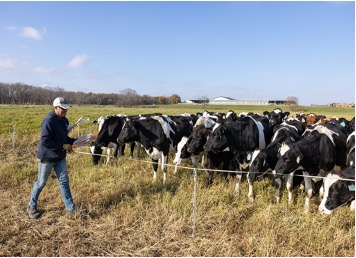
UW-Madison, Division of Extension, Ag and Water Quality Webinar
Supporting Economic and Water Quality Opportunities Through Expanded Dairy Heifer Grazing
Sarah Lloyd, Value Chain Coordinator, Grassland 2.0, Stephanie Bowers, Extension Dairy Educator, and Paul Daigle, Dairy Grazing Specialist, Dairy Grazing Alliance
3 Feb 2026, 12p CT, Register here: https://agwater.extension.wisc.edu/webinars/
Raising dairy heifers on well managed pastures can improve soil health, water quality, and biodiversity. In addition to ecological benefits, heifer grazing offers cost savings to graziers, supporting viable farm enterprises. In this session we will learn about collaborative efforts to support increased dairy heifer grazing in the state.
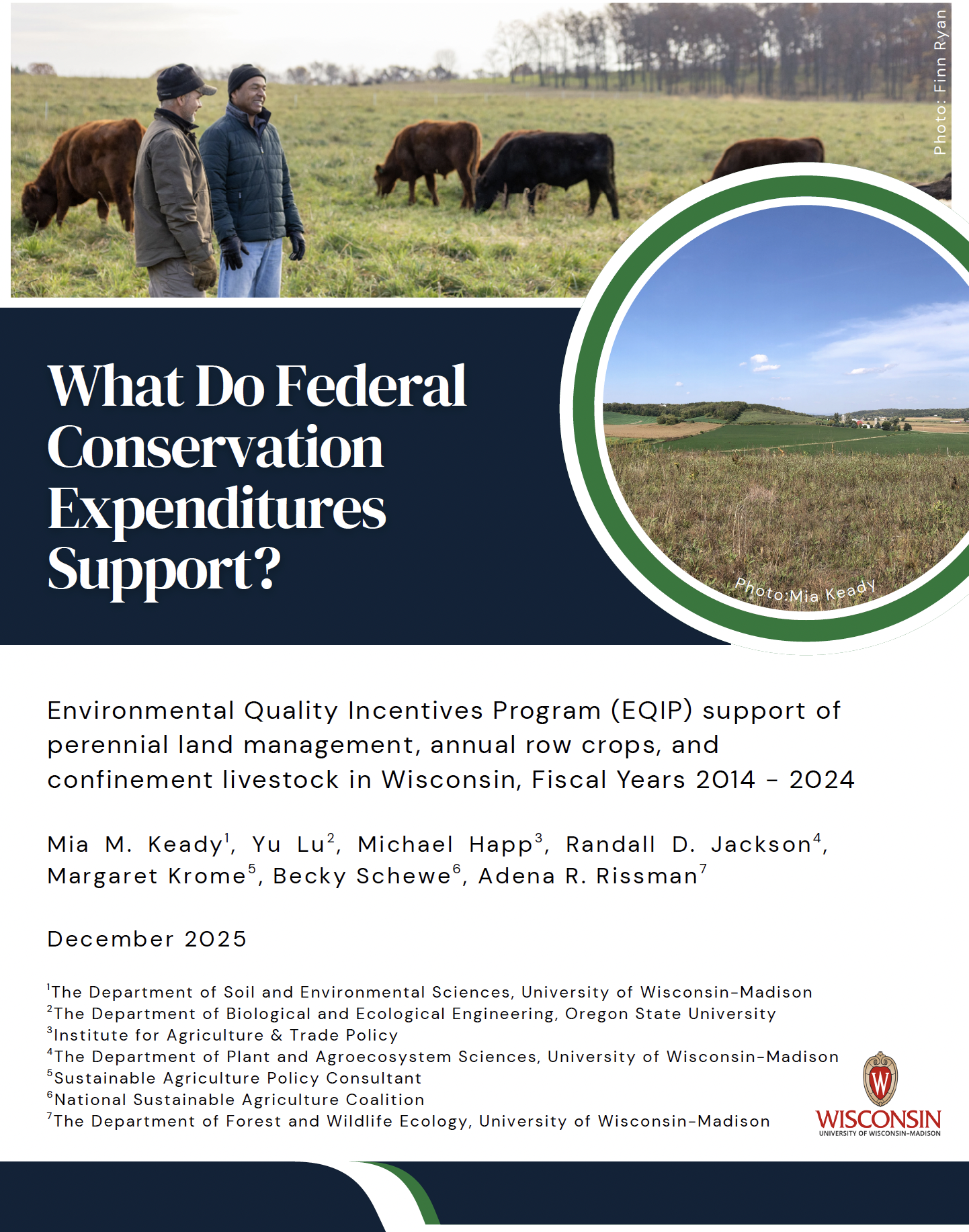
Mia Keady’s work where EQIP cost-share dollars in Wisconsin flow
…mostly to annual row crop and livestock confinement operations in counties with more and bigger farms to reduce their pollution. Significantly fewer dollars flow to help farmers transition to farming that improves ecosystem health.
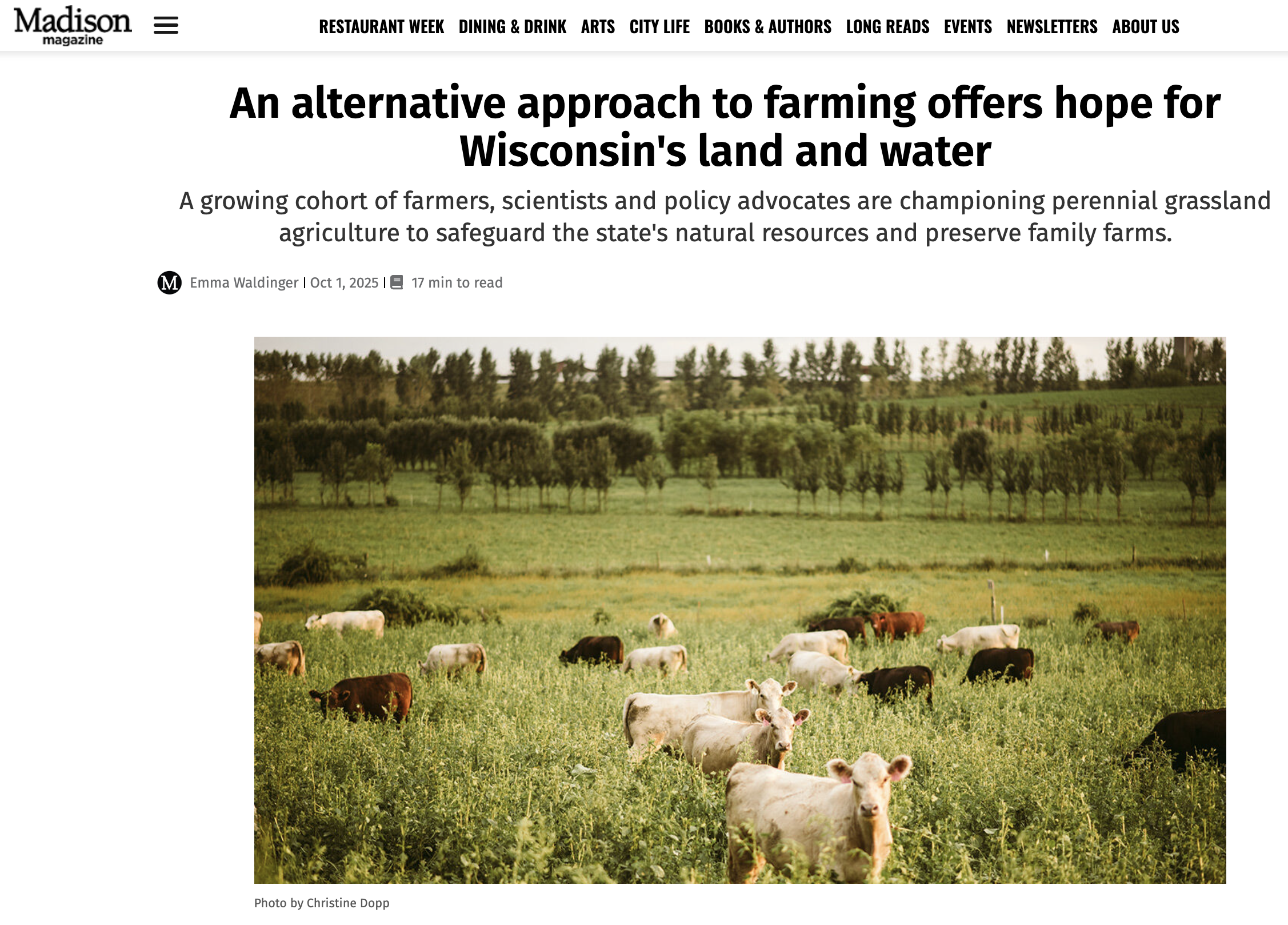
Emma Waldinger’s Oct 2025 piece in Madison Magazine exploring grassland agriculture in southern Wisconsin
Emma, now the Food Editor at Madison Magazine, was a student in Agroecology 103 An Introduction to the Ecology of Food & Agriculture in Fall 2020!
Madison Magazine Aug 2024 article asking “What’s wrong with the ‘Most Studies Lake in the World?’
In the 2025 Milwaukee Press Club Awards, “The Most Studied Lake in the World” won Bronze in the Best Public Service Story or Series category.
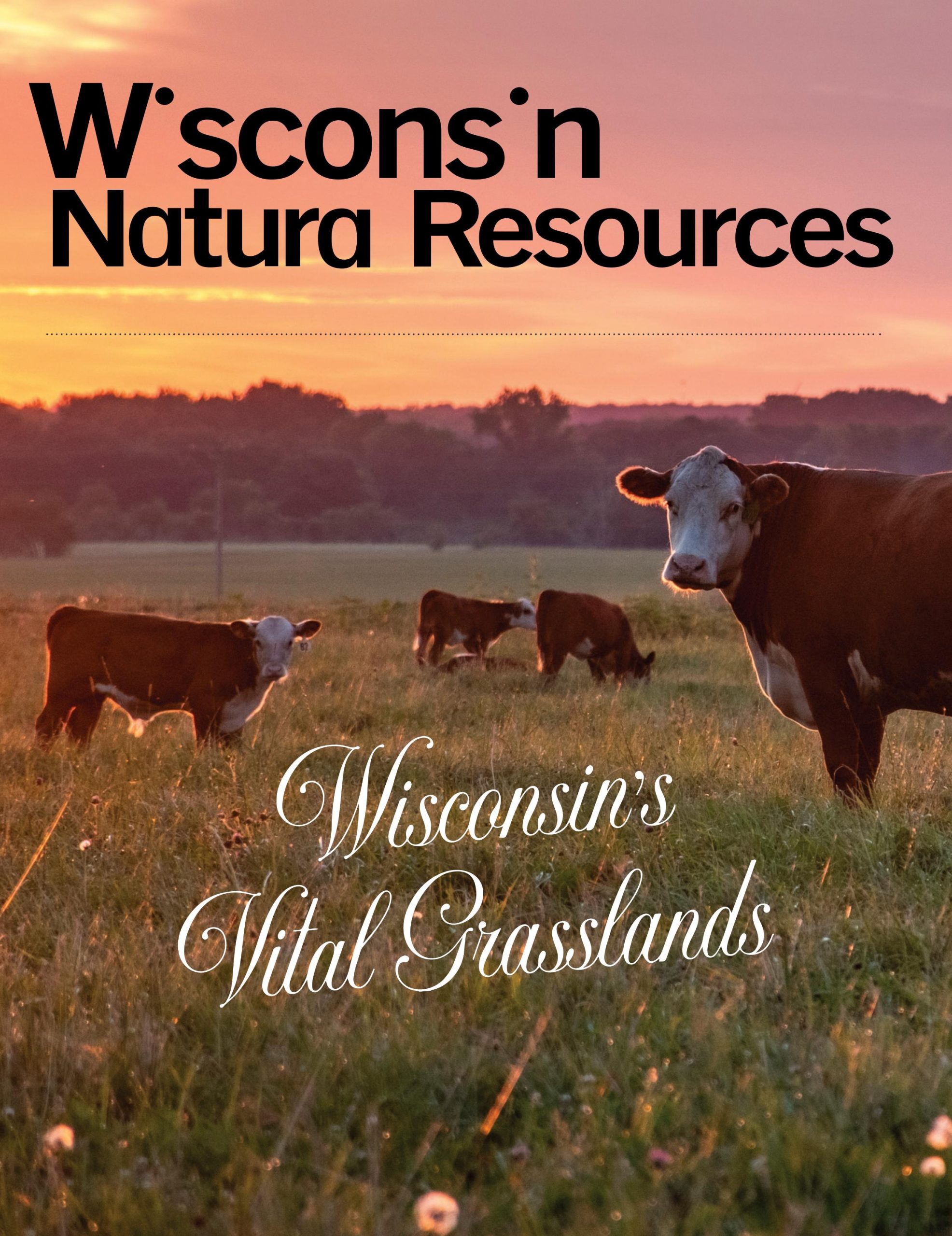
Molly Meister’s beautiful article exploring Wisconsin’s Vital Grasslands in Wisconsin Natural Resources Summer 2024
From the Northwoods to the Driftless Area, Wisconsin’s abundant natural resources are downright postcard-worthy. We treasure our plentiful lakes, rivers and streams, lush forests, unique geology and so much more.
But one of our most essential resources often goes unnoticed and underappreciated — Wisconsin’s grasslands. Also known as prairies, grasslands once were everywhere across the Midwest. But their footprint keeps getting smaller and smaller, giving way to urban and suburban development and row-crop agriculture.
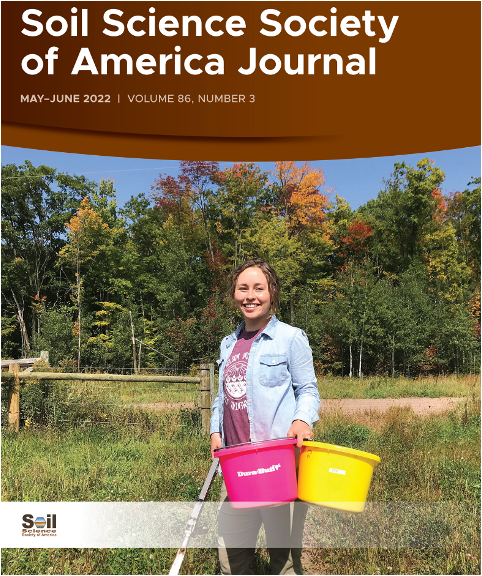
Ashley Becker addresses the question, Can cover crops & no-till reduce dairy greenhouse gas emissions? in the Dec 2023 edition of Decode 6
The short answer: Cover crops and no-till may improve soil health by increasing soil structure and reducing soil erosion, but their impact on reducing greenhouse gas (GHG) emissions is highly variable and context dependent.
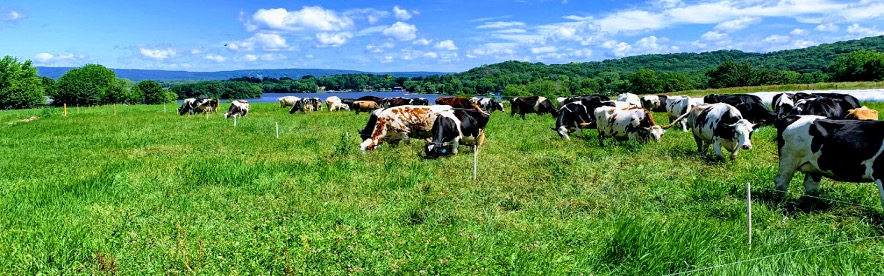
We can fix agriculture!
Randall D Jackson, Laura K Paine, Claudio Gratton, Bradford L Barham, Gregg R Sanford, Eric Booth, Pamela Porter, Michael Bell, Jacob Grace, Alan Turnquist, Bert Paris, David LeZaks, Richard L Cates Jr, Dennis Keeney, Curt Meine, Stephen R Carpenter, Laura L Jackson, Jason Cavadini, W Carter Johnson, Paul Daigle, William D Kolodziej, Julie E Doll, Rob Anex, Paul Johnson, and Tom Kriegl
This essay is co-published with the Center for Humans and Nature as part of their Questions for a Resilient Future series: What does it mean to be a farmer in the twenty-first century? You are invited to read more responses to this question and share your own reflections at humansandnature.org.
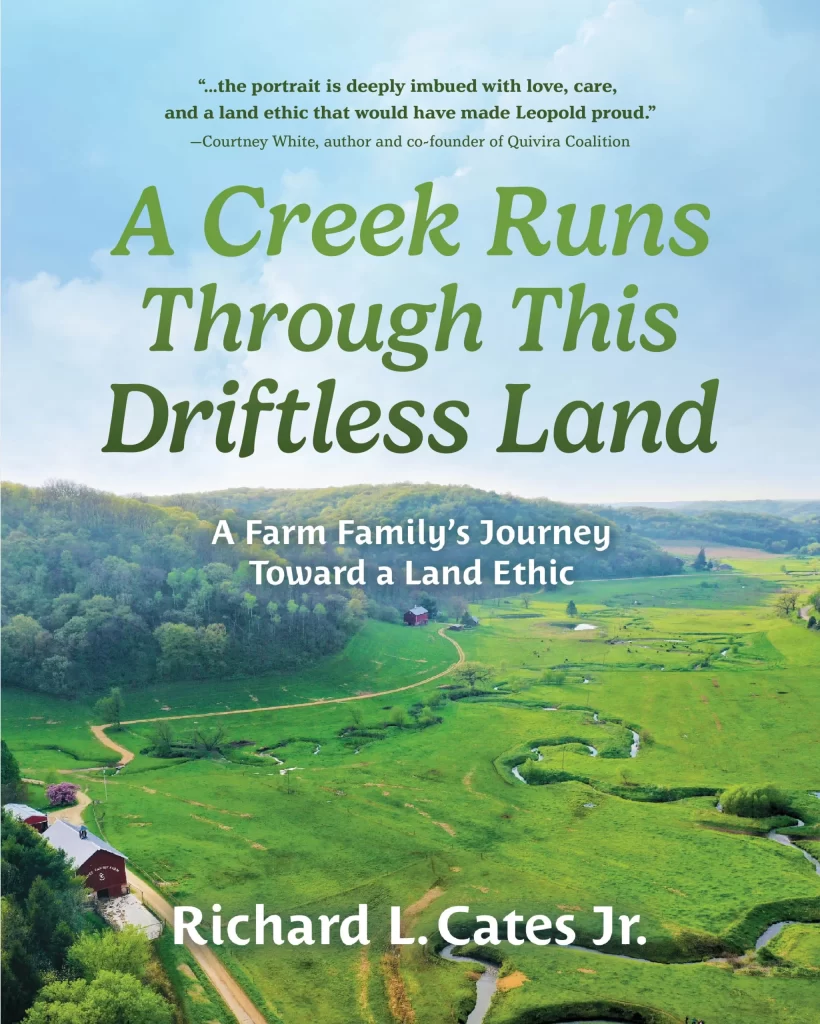
Read about the Cates Family Farm!
The story of the Cates Family Farm can serve as a paradigm for those with an interest in a more restorative, regenerative, perennialized agriculture and an ethical relationship with “place.” It illustrates the movement away from industrialized, chemically dependent, minimally diversified farming to one that more closely mimics nature’s wisdom—an approach to a viable farm business that honors the legacies of the past inhabitants of the landscape and looks ahead to the health and well-being of the generations to come. It is a story of long and hard work, as well as listening. It is the story of a journey toward a land ethic, gratitude, and hope. – Don Greenwood, former chair, Lower Wisconsin Riverway Board; retired editor, Weekly Home News, Spring Green, Wisconsin, Driftless Area